Few draft narratives this season carried the quiet intrigue of the Los Angeles Rams’ late-round pursuit of Alabama quarterback Ty Simpson. While most outlets focused on headline-grabbing trades and consensus prospects, Albert Breer’s draft takeaways illuminated a subtler story: how a team with limited capital executed a disciplined, data-backed strategy to land a developmental arm with long-term upside.
Breer, one of the most trusted voices in NFL reporting, didn’t just report the pick—he unpacked the mechanics behind it. His analysis revealed not just that the Rams selected Simpson, but why, how, and what it says about their broader vision for the quarterback position.
This wasn’t a reactionary selection. It wasn’t a draft-room panic. It was a calculated bet rooted in film, analytics, and patience—exactly the kind of move Breer has long championed as the hallmark of sustainable roster building.
Let’s dissect the layers of Breer’s reporting and what it reveals about the Rams’ process.
The Rams’ Quarterback Conundrum
The Rams entered the draft with a clear gap at quarterback. Matthew Stafford, while still productive, is aging and injury-prone. Baker Mayfield, the stopgap solution, didn’t present a long-term answer. Los Angeles needed to think beyond 2024.
But the team operated under constraints. They lacked premium draft capital—no first or second-round picks—limiting their ability to land a blue-chip prospect. That made their approach all the more critical.
Breer emphasized this: “When you’re short on picks, every selection has to serve multiple purposes—immediate depth, developmental pathway, and trade leverage.”
The Rams couldn’t swing for the fences. They had to play chess.
Their solution? Target a quarterback with raw tools, a clean injury history, and enough developmental runway to mold him under Stafford’s mentorship. Enter Ty Simpson.
Why Ty Simpson Fit the Rams’ Profile
Simpson’s college career at Alabama was modest—just 11 career starts, 19 touchdowns, 7 interceptions. On paper, he doesn’t jump off the stat sheet. But Breer’s takeaways highlighted that the Rams weren’t buying stats. They were buying traits.
Here’s what stood out in Breer’s assessment:
- Arm talent: Simpson can drive the ball 60+ yards in the air with velocity and tight spirals. His deep-ball mechanics intrigued Rams evaluators.
- Processing speed: Despite limited reps, Simpson showed quick decision-making in Alabama’s complex offense. He wasn’t just a system quarterback.
- Mobility: At 6’2”, 208 lbs, Simpson is agile and has long speed. He’s not a scrambler by design, but can extend plays and add rushing threat.
- Coaching pedigree: Played under Nick Saban. Breer noted that “Saban quarterbacks tend to mature quickly—they’re taught process, detail, and accountability.”
The Rams also valued Simpson’s background: a former four-star recruit from New Jersey who transferred to Alabama after a year at a prep school. That kind of journey signals adaptability—an underrated trait for NFL transition.
Breer reported that Simpson tested off the charts in the Rams’ internal cognitive assessment, a proprietary tool used to gauge learning speed, recall under pressure, and play recognition. “That kind of data,” Breer wrote, “can outweigh a thin college résumé when you’re betting on projection.”
How the Rams Positioned for the Pick
Los Angeles didn’t just fall in love with Simpson and hope he lasted. They engineered the scenario.

Breer detailed how the Rams used pre-draft communication to shape the landscape:
- Controlled the rumor mill: The team quietly leaked interest in other mid-tier QBs (like J.J. McCarthy and Cam Ward) to mask their true target.
- Private workouts as intel: Simpson’s private session with the Rams wasn’t a standard eval. It was a stress-test—multiple live throws, rapid-fire playbook quizzing, and simulated game scenarios. He aced it.
- Draft-day floor management: The Rams established a “hard floor” at No. 185 (fifth round) based on Simpson’s projected value and board fit. They refused to overpay.
Breer noted that Simpson was “undervalued by traditional metrics,” which allowed the Rams to pounce when others hesitated. “Teams were hung up on his lack of starts,” Breer observed. “But L.A. saw it differently—less wear, more teachability.”
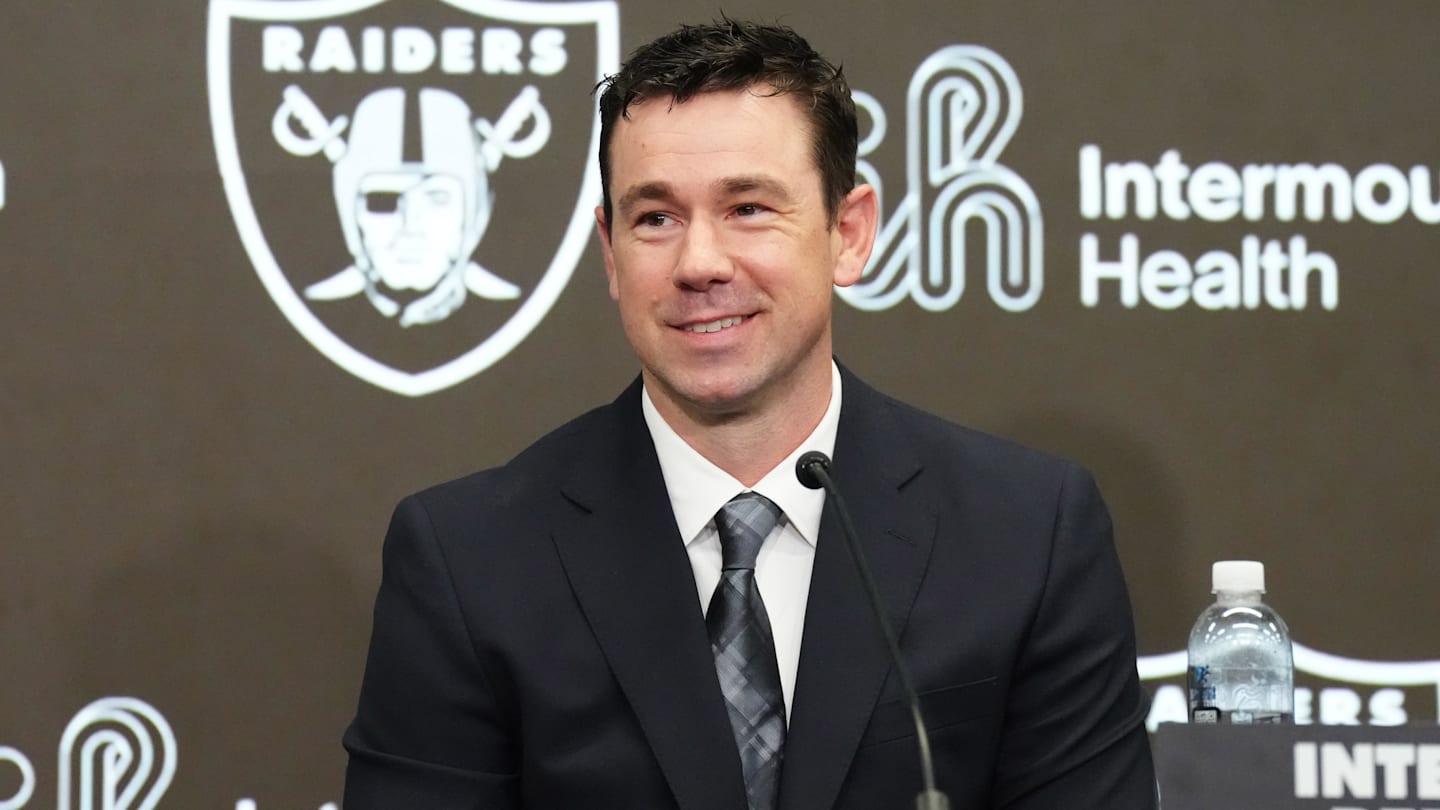
By the time the fifth round arrived, the Rams had already traded down twice, accumulating extra Day 3 picks. That gave them flexibility. When Simpson survived past 170, they moved up just four spots—sending a sixth-rounder and a 2025 fourth-round pick to the Raiders—to secure him.
A minor cost. A major signal.
The Developmental Timeline: What’s Next for Simpson?
Breer stressed that this isn’t a “QB of the future” pick. Not yet. But it’s a foundational investment.
The Rams’ plan for Simpson, per Breer’s sources:
- Year 1: Redshirt candidate. Practice squad eligible. Work under Stafford and offensive coordinator Mike LaFleur daily.
- Year 2: Push for third-string role. Participate in preseason games. Study system deeply.
- Year 3: Challenge for backup job. If Stafford retires or is traded, Simpson could compete with Mayfield or a new signing.
The Rams aren’t expecting Simpson to start in 2024. But they are preparing for 2026 and beyond.
Breer pointed out that “the best developmental arcs aren’t rushed. Look at Joe Burrow—Bengals let him sit, learn, and explode. That patience pays.”
Simpson’s path mirrors that model. He’ll benefit from:
- A stable offensive system (LaFleur’s West Coast variant)
- A veteran mentor (Stafford)
- A coaching staff focused on QB development (passing game coordinator Zac Taylor has a strong track record)
The Rams aren’t just drafting a quarterback. They’re building a pipeline.
Why Breer’s Takeaways Matter Beyond This Pick
Albert Breer’s analysis of this selection isn’t just about one player or one team. It reflects a broader shift in NFL drafting philosophy.
Teams with limited capital are forced to be smarter, not louder. They can’t outspend. They must out-think.
Breer’s reporting underscored three strategic principles the Rams exemplified:
- Value over volume: Ignore consensus rankings. Build your own board based on fit, not hype.
- Data-informed, not data-driven: Use analytics as a tool, not a dictator. Simpson’s cognitive scores supported the film, not replaced it.
- Long-term vision over short-term wins: The Rams aren’t contending in 2024. But they’re positioning for 2026 relevance.
These aren’t revolutionary ideas. But Breer’s value lies in showing how they’re executed in real time—by real teams, with real constraints.
Too many outlets focus on the spectacle of the draft: the tears, the trades, the instant reactions. Breer cuts through that noise to expose the machinery beneath.
Common Mistakes Other Teams Made
While the Rams executed with precision, Breer’s takeaways also highlighted where others went wrong:
- Overvaluing production: Multiple teams passed on Simpson because he didn’t put up big numbers. But Breer reminded readers: “He was behind Jalen Milroe and Bryce Young at Alabama. Production doesn’t always reflect talent.”
- Ignoring intangibles: Some clubs dismissed Simpson’s leadership, despite multiple teammates citing his work ethic in off-season programs.
- Draft-day panic: Several QB-needy teams reached on Day 3, trading up for players with higher risk profiles. The Rams stayed patient.
Breer’s point was clear: “When you have a plan, you don’t react. You act.”
The Rams had a plan. Simpson was part of it long before draft weekend.
A Blueprint for Smart Drafting
The Rams’ selection of Ty Simpson isn’t a headline-grabber. It won’t trend on social media. But in the quiet corners of NFL front offices, it’s being studied.
Albert Breer’s draft takeaways didn’t just describe a pick—they revealed a blueprint:
- Identify your needs early
- Build a custom evaluation model
- Let data and film align, not compete
- Stay disciplined on draft day
- Think in five-year arcs, not one-year wins
Simpson may never start a game for the Rams. But that doesn’t make the pick a failure. He could become a trade asset, a mentor, or a surprise starter after an injury.
In today’s NFL, value isn’t just about immediate impact. It’s about optionality.
And the Rams just bought themselves several years of it.
Practical Takeaways for NFL Fans and Analysts:
- Don’t judge late-round picks by headline talent alone—look for fit and projection
- Cognitive testing and private workouts matter more than pro day numbers
- Teams with few picks must maximize every selection—depth, trade value, and development
- Alabama QBs often develop later—see Tua Tagovailoa’s trajectory
- Veteran presence (like Stafford) accelerates young QB growth
The next time a “sleeper” QB gets drafted in the fifth round, remember Ty Simpson and the quiet process that brought him to Los Angeles. Thanks to Albert Breer’s sharp analysis, we don’t just see the result—we understand the method behind it.
If you’re looking for sustainable team building, this is what it looks like.
FAQ:
Why did the Rams draft Ty Simpson so late? Despite his tools, Simpson had limited starting experience and was behind more established QBs at Alabama, which lowered his draft stock.
Did Albert Breer predict the Rams would pick Ty Simpson? Breer didn’t name Simpson specifically, but his pre-draft reporting highlighted the Rams’ focus on developmental QBs with high cognitive scores and mobility.
Can Ty Simpson become the Rams’ starter? It’s possible, but not immediate. He’s expected to develop behind Matthew Stafford and Baker Mayfield, with a potential shot in 2026 or beyond.
What did Breer say about the Rams’ draft strategy? Breer praised their discipline, use of data, and ability to stay patient despite limited picks—calling it a “textbook” approach for a team in their position.
How does Simpson fit the Rams’ offensive system? His arm strength and processing speed align well with Mike LaFleur’s timing-based, play-action-heavy offense.
Was the trade-up for Simpson worth it? Yes—giving up a future fourth and a sixth-round pick to move up four spots was a minimal cost for a player with starting potential.
What makes Albert Breer’s draft analysis stand out? Breer combines insider sources, deep film understanding, and a focus on process over noise—offering fans real insight into how teams think.
FAQ
What should you look for in Albert Breer’s NFL Draft Takeaways: Rams’ Move for Ty Simpson? Focus on relevance, practical value, and how well the solution matches real user intent.
Is Albert Breer’s NFL Draft Takeaways: Rams’ Move for Ty Simpson suitable for beginners? That depends on the workflow, but a clear step-by-step approach usually makes it easier to start.
How do you compare options around Albert Breer’s NFL Draft Takeaways: Rams’ Move for Ty Simpson? Compare features, trust signals, limitations, pricing, and ease of implementation.
What mistakes should you avoid? Avoid generic choices, weak validation, and decisions based only on marketing claims.
What is the next best step? Shortlist the most relevant options, validate them quickly, and refine from real-world results.